
Views: 0 Author: Site Editor Publish Time: 2026-09-07 Origin: Site


Glass Teapots can look simple in a catalog, but a successful sourcing decision involves far more than selecting a shape. Brands and hospitality buyers need a product that suits their tea service, handles the intended temperature range, pours cleanly, is practical to wash, arrives safely, and can be reordered with consistent specifications. When a logo, custom packaging, or distinctive component is involved, the need for a clear brief becomes even greater. This guide provides a structured way to evaluate Glass Teapots before moving from inspiration to sample approval and production.
Start with the real use case: retail, hotel service, café brewing, gifting, or a mixed program.
Confirm glass type, intended heat use, capacity, spout performance, handle comfort, lid fit, and cleaning access.
Evaluate an infuser, if required, as part of the whole brewing and pouring system.
Define quality requirements with approved samples, dimensions, artwork, packing, and inspection points.
Choose a glass teapot supplier that can communicate clearly about product, customization, packaging, and reorder consistency.
The first sourcing question is not “Which teapot looks best?” It is “What will this teapot need to do?” A hotel tea service may need a durable, easily handled pot that fits existing cups and trays. A specialty tea brand may need a clear, elegant body that makes blooming tea visible. A retail gift program may prioritize shelf impact and protective packaging. A café may need an infuser, a controlled spout, and a capacity that suits its menu portions.
Writing down the use case protects the project from vague decisions. State the primary tea formats, expected serving size, target market, selling channel, and desired price position. Identify whether the pot will be used directly with hot water, whether a particular appliance use is required, and whether it will be washed commercially or at home. Those answers guide every later choice.
One product can serve multiple applications, but only if the requirements are compatible. A delicate retail display pot may not be the right choice for high-frequency banquet service. A large shared-service pot may be too bulky for a single blooming tea gift set. Segmenting the use cases early is more efficient than trying to create one “universal” product with conflicting features.
Material is central to Glass Teapots because hot tea is part of their purpose. Many premium tea products use borosilicate glass because it is designed to handle temperature changes better than ordinary glass. However, buyers should request the material specification and care guidance for the exact product rather than rely on a general product category statement.
Ask what the glass type is, what temperature-use guidance applies, and whether the model is intended for direct heat, microwave use, dishwasher use, or only hot-water infusion. Do not turn a generic claim into a stronger promise without written confirmation. The spout, handle, lid, and infuser may introduce their own limitations, so the product must be assessed as a complete assembly.
Material decisions also affect feel and positioning. A thin, refined body can look premium but needs suitable handling and packaging. A more substantial construction may feel reassuring in hospitality use but can add weight. The best balance depends on the customer and setting. There is no point selecting an elegant material story if the product is awkward to pour or too fragile for its daily role.
Capacity should match the way tea will actually be brewed and poured. A single-person teapot, a two-cup afternoon service pot, and a larger shared table pot each require different proportions. The stated capacity should be clear, but buyers should also consider practical fill level. A pot is not normally poured to the absolute rim, especially when an infuser, tea leaves, or a flower tea bundle is inside.
Ask how many servings the product is intended to provide with the buyer’s chosen cup size. Compare the body dimensions with tray space and storage racks. For a hospitality buyer, a pot that looks right but does not fit the dishwasher rack or tea station can create operational problems. For retail, a capacity that does not make intuitive sense to the consumer can weaken the product’s appeal.
Think about the desired ritual too. A small pot can support multiple short infusions and prevent tea from sitting too long. A larger pot may be better for sharing at a table. A blooming tea product needs enough room for the flower to open. The capacity decision should be linked to the actual tea, not just a round number on a specification sheet.
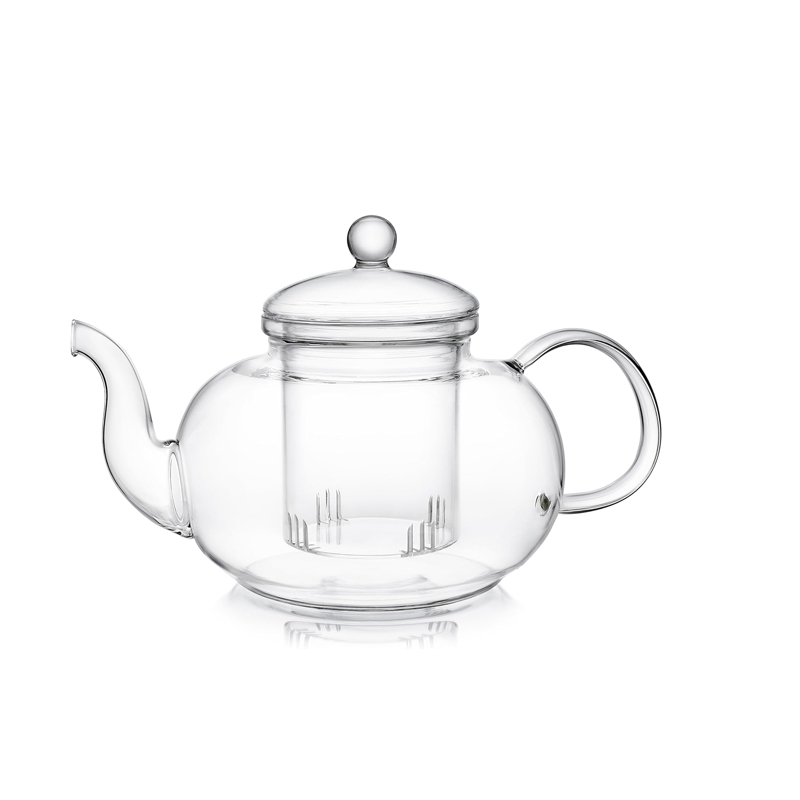
Pouring is where product design becomes visible to the user. A well-designed spout creates a controlled stream and reduces unwanted drips. A poorly shaped spout can make even a beautiful teapot frustrating at the table. Buyers should test a filled sample, observing how it tilts, how the lid behaves, whether liquid runs down the outside, and how it returns to the table after pouring.
The handle should allow a secure grip without bringing the hand too close to the hot body. It should feel balanced at a realistic fill level, not only when empty. If the product is handle-free, the exterior geometry and material thickness need to support safe handling in its intended use. In either case, consider different hand sizes and the speed of service expected in the venue.
The base must sit flat. This may seem obvious, but a stable base is essential on trays, polished tables, and service stations. Inspect the rim, spout, handle attachment, and base for smooth finishing. These are the areas users and staff touch repeatedly, and they strongly influence perceived quality.
An infuser makes a teapot more versatile for loose leaves, but it also adds a component that needs fitting, cleaning, and replacement consideration. Decide whether the main tea format needs it. Blooming tea may be best brewed in open space, while loose-leaf tea often benefits from a filter that can be lifted out when the desired strength is reached.
If an infuser is required, evaluate its capacity, mesh or perforation pattern, handle, seat, and compatibility with the lid. Fine tea particles may need a different filter solution from large whole leaves. The basket must not make the pot too difficult to clean or reduce usable capacity beyond what the buyer expects.
Also consider spare-part logic. In a hospitality operation, lids and infusers can be lost or damaged separately from the main body. A supplier discussion should cover whether compatible replacements can be supplied and how the components are identified. This is less glamorous than choosing a shape, but it affects the product’s useful life.
Quality control should be translated into visible, inspectable points. For Glass Teapots, buyers commonly review body clarity, dimensions, base flatness, rim smoothness, spout alignment, handle attachment, lid fit, infuser fit, and visible defects according to the agreed standard. The point is not to demand impossible perfection; it is to define a consistent standard appropriate to the product’s material and position.
An approved sample is the most useful reference. It should be retained and identified with the product code, revision, date, and any agreed notes. If a color, logo, or packaging has been approved, include those elements in the master sample or related approval set. This gives quality teams on both sides something specific to compare during future production.
Testing should reflect intended use. A buyer might ask to assess pouring, lid stability, handle comfort, basic leak behavior in normal use, and packing protection. The exact test plan should be agreed with the supplier and should not assume capabilities that have not been confirmed. A clear plan is more valuable than broad claims about durability.
A custom glass teapot can help a brand create a distinctive tea ritual, but customization should start from a workable base product or a carefully defined development brief. Changes to body shape, lid, handle, infuser, color, logo, decoration, and packaging can each affect cost, production feasibility, and delivery planning. Prioritize the elements that genuinely create customer value.
For some brands, a custom logo on an established clear borosilicate tea pot may be sufficient. For others, a signature handle, wooden accent, color detail, or retail box may be more important. Do not add every possible feature simply because it is available. A coherent design with one or two recognizable elements is often easier to manufacture, explain, and reorder.
Artwork needs the same rigor as the physical form. Supply usable files, define the decoration position and size, state the color reference, and inspect the result on a real sample. Consider how the mark appears when the pot is filled with tea and when it is viewed on a shelf. The brand treatment should support the clear visual nature of the pot rather than blocking it.
Jingshi’s Glass Teapots & Jugs range is a useful reference point for buyers considering heat-resistant borosilicate designs, infusers, and glassware customization. Jingshi can use the buyer’s practical brief to discuss which details are meaningful for the intended channel.
Glass teapot packaging has two jobs: it must protect a shape with vulnerable parts such as a spout, lid, and handle, and it must present the product appropriately for the channel. A wholesale inner pack, an e-commerce-ready retail box, and a premium gift box are different solutions. The product should not be finalized before the packing approach is understood.
Discuss carton configuration, inner protection, labeling, barcodes if required, and whether lids or infusers are packed separately. Review a packed sample where possible. A product that survives a careful factory inspection can still fail in transit if the protection does not match the distribution route.
For hospitality, packaging also affects receiving and storage. Staff need a practical way to unpack, inventory, and store replacement pots. For retail, the package may need to communicate capacity, care, tea compatibility, and brand story without making claims that cannot be supported. Every word and image should be reviewed as part of final approval.
The right glass teapot supplier should be able to discuss the product in concrete terms. That includes material, dimensions, manufacturing limits, customization options, packing, quality checkpoints, order quantity, and future reorder consistency. Clear answers and well-organized samples are stronger evidence than generic superlatives.
Ask how the supplier manages changes after sampling. Find out what information is recorded for a repeat order. Clarify who approves artwork, packaging, and production samples. If the buyer expects an ongoing collection, discuss how variations will be controlled over time. The aim is not to eliminate all change; it is to make change visible and agreed before it reaches the market.
Anhui Jingshi Household Products Co.,Ltd. identifies its focus as glassware manufacturing and export, with product lines in soda-lime and high borosilicate glass. Buyers should use that context to have a specific conversation about the type of Glass Teapots they need rather than treating a category page as a complete sourcing specification.
Use this checklist to organize the enquiry and sample review.
Area | Questions to answer before approval |
Use case | Who will use the teapot, where, and for which tea formats? |
Material | What glass is specified and what usage guidance applies? |
Capacity | What is the practical serving volume with the intended tea setup? |
Function | Does the spout pour cleanly and does the handle feel balanced? |
Components | Does the lid fit securely and does the infuser suit the intended leaves? |
Quality | What sample, dimensions, finish, and inspection points define approval? |
Customization | What artwork, color, decoration, and packaging are required? |
Packing | How will the body, spout, handle, lid, and infuser be protected? |
Reorders | Which codes and references will keep later orders consistent? |
This checklist is also helpful for internal alignment. Product, purchasing, design, operations, and marketing teams may each have different priorities. A structured brief reveals conflicts early, before a design reaches tooling or production.
One common mistake is buying based only on a photograph. Images rarely reveal the thickness, balance, pour behavior, lid tolerance, or cleaning access of a glass pot. Another is asking for a “heat-resistant” item without clarifying the actual intended temperature and appliance use. A third is choosing a large capacity without considering practical fill level, storage, and the number of cups served.
Buyers also sometimes add customization too late. If a logo, box, color, or special component is critical to the product story, it needs to be part of the initial brief and sample approval. Finally, do not overlook replacement planning. A hotel or retailer with an ongoing line needs a clear product reference and a realistic view of how later orders will be matched.
Sourcing Glass Teapots successfully means connecting material, function, presentation, quality control, and packaging in one clear specification. Brands and hospitality buyers should begin with the tea ritual and service environment, then evaluate heat-use guidance, capacity, pouring, handles, lids, infusers, and cleaning. Samples, documented approvals, and practical supplier communication turn those decisions into a product that can perform in the market as well as it looks in a catalog. A careful brief at the start is the most reliable path to a consistent, usable glass teapot program.
Ask for the material specification and the intended heat-use guidance for the exact model. Borosilicate glass is commonly used for heat-resistant tea products, but the complete product guidance should be confirmed before selection.
Base it on the actual tea service, cup size, and number of guests. Consider the practical fill level and the space needed for leaves, an infuser, or a blooming tea bundle.
Check base stability, spout control, handle comfort, lid and infuser fit, interior access for cleaning, visual finish, dimensions, and packaging protection.
It is useful when the product must serve loose-leaf tea as well as other infusions. For blooming tea alone, open internal space may be more important than a filter basket.
Provide the use case, target market, material expectations, capacity, tea formats, desired shape, required components, logo artwork, packaging needs, quantity, and quality priorities.
It provides a specific reference for dimensions, finish, components, decoration, and packing. That makes production checks and future reorders more consistent.


