
Views: 0 Author: Site Editor Publish Time: 2026-09-16 Origin: Site


Choosing the right glassware shapes the entire drinking experience. Selecting glassware is no longer just an aesthetic choice; it directly impacts operational overhead, replacement costs, and the end-user’s tasting experience. Today, buyers must weigh the traditional tasting fidelity of stemmed designs against the modern durability and storage efficiency of stemless models. Making the wrong choice can frustrate patrons or drain your budget through endless replacements. You need a reliable strategy to match your inventory to your actual service conditions. Expect an objective breakdown of thermal dynamics, operational realities, and commercial viability. We will explore everything from temperature control to storage footprints. Ultimately, these insights will help you finalize your glassware procurement strategy. You can then confidently build a product line tailored precisely to your audience.
Stemmed designs preserve intended serving temperatures and prevent visual smudging, making them non-negotiable for premium tasting environments.
Stemless designs reduce breakage rates and optimize storage footprints, offering high ROI for casual venues, outdoor events, and high-volume retail.
The choice between the two should hinge on your primary success criteria: operational scalability (durability/storage) versus experiential authenticity (aroma focus and temperature control).
A hybrid inventory model often provides the best coverage, allocating specific glass types based on wine varietal and service setting.
Evaluating how glassware impacts your bottom line defines your success criteria. You must look beyond initial procurement costs. Consider replacement frequency and customer perception. High breakage rates quickly erase profit margins. Poor tasting experiences damage your venue's reputation. Finding the right balance ensures commercial success.
The operational reality often dictates your choices. Stems represent the primary structural failure point. Commercial dishwashing involves high heat and aggressive water pressure. High-traffic handling leads to inevitable bumps and drops. Standard stems snap easily under these stressful conditions. You must account for this inherent fragility when planning annual budgets.
Conversely, you face significant experiential risks. Serving high-end vintages in improper vessels creates notable problems. It can mute delicate aromatics. It artificially raises the temperature of the wine. This degrades the perceived value of the pour. Patrons expect premium service when they pay premium prices. Disappointing them leads to negative reviews and lost repeat business.
Aligning your inventory with your target demographic remains essential. Traditional wine connoisseurs expect classic stemmed presentations. Casual, modern consumers often prefer approachable designs. They prioritize comfort and relaxed atmospheres. You must understand who will use these glasses daily.
Common Mistake 1: Ignoring the physical limitations of your dishwashing racks when ordering tall stems.
Common Mistake 2: Purchasing fragile glasses for high-volume patio events.
Common Mistake 3: Failing to consult service staff about handling difficulties before finalizing bulk orders.
Thermodynamics play a crucial role in proper wine service. The human hand transfers heat rapidly. Stemmed glasses isolate body heat away from the bowl. This separation is critical for serving white wine glasses at optimal chill. Crisp whites lose their refreshing bite when warmed. You must protect the liquid from external heat sources to preserve acidity.
Aroma collection depends heavily on bowl shape and manipulation. Traditional red wine glasses encourage proper swirling. A stem allows the drinker to agitate the wine safely. This introduces oxygen to release volatile compounds. Swirling without a stem increases spill risks. The stem acts as a functional lever for vital aeration.
You must acknowledge the stemless compromise. Modern stemless wine glasses utilize identical bowl shapes for aeration. However, inevitable hand-to-bowl contact accelerates oxidation. Heat transfers directly through the thin glass wall. This warming effect proves acceptable for robust reds like Cabernet Sauvignon. It remains highly detrimental for crisp whites and delicate rosés.
Visual presentation also influences the tasting experience profoundly. Holding the bowl leaves fingerprints and greasy smudges behind. The glass quickly loses its pristine clarity. A stem prevents this messy visual interference. Holding a stem maintains a spotless presentation throughout the meal. Clean glassware always elevates the perceived quality of the beverage. Experts consider visual clarity an essential part of the tasting ritual.
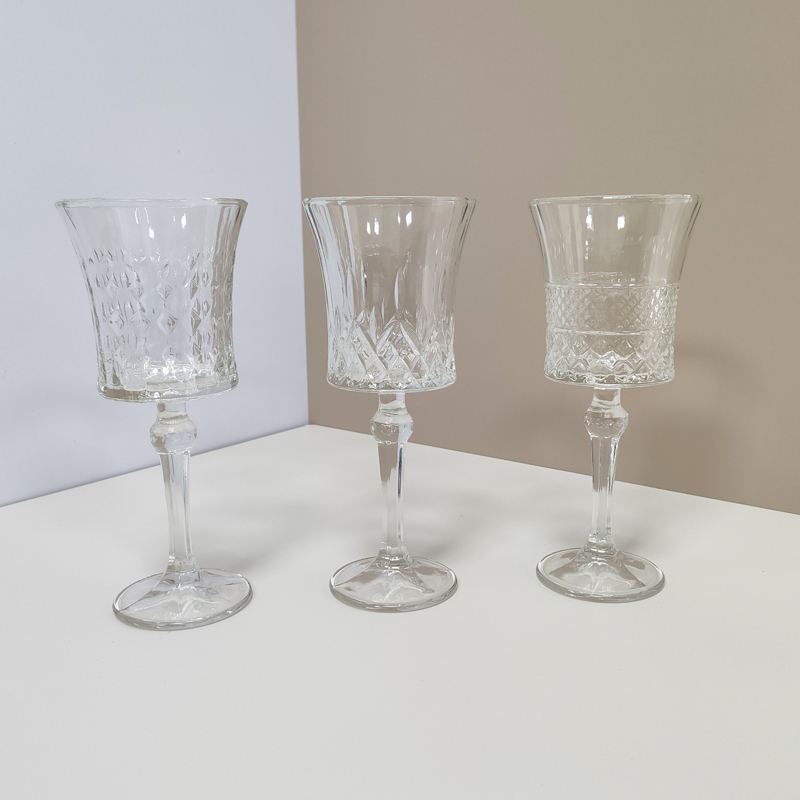
Space utilization dictates many back-of-house decisions. Stemless models offer significant vertical space savings. They stack safely in crowded storage rooms. They require smaller retail packaging boxes. They fit comfortably inside standard consumer cabinets. Maximizing storage efficiency lowers your warehousing footprint and streamlines service stations.
Dishwasher compatibility separates residential usage from commercial realities. Stems require specialized racking systems. Poor racking leads to fatal tension snaps. Stemless models fit standard wash racks safely. They endure the vibrations of commercial washing without snapping. This structural advantage significantly reduces daily turnaround times. Staff can load racks faster and wash more units per cycle.
Breakage analytics reveal striking operational contrasts. You must compare the average lifecycle of stemmed vs stemless wine glasses. High-volume environments destroy stems rapidly. Hospitality venues and catering companies face massive replacement budgets annually. Tasting rooms see fewer broken stems but still experience daily losses. Stemless options routinely survive three times as many commercial wash cycles.
Operational Metric | Stemmed Glasses | Stemless Glasses |
|---|---|---|
Storage Footprint | High vertical space required | Compact, easily stackable |
Dishwasher Safety | Low (requires specialized racks) | High (fits standard racks) |
Average Lifespan | Shorter (frequent stem snaps) | Longer (durable base) |
Transport Liability | High risk of transit breakage | Low risk, easier packaging |
Transport and gifting logistics heavily favor simpler designs. Stemless models dominate the custom-engraving market. Corporate gifting programs prefer them universally. They pose much lower shipping liabilities for e-commerce brands. Their compact shape requires simpler, cheaper packaging requirements. You lose less inventory to transit damage. This reliability makes them highly profitable for retail operations.
Evaluating raw materials informs your long-term procurement strategy. You must understand the structural differences between glass types. Standard soda-lime glass offers resilient everyday performance. High-end crystal wine glasses provide superior clarity and elegance. They contain minerals increasing their light refraction. Modern manufacturers often use lead-free crystal fortified with titanium for added strength.
Thickness directly impacts both durability and experiential quality. Crystal allows for an ultra-thin rim construction. This thin edge enhances the tactile tasting experience. Wine flows seamlessly onto the palate. However, this thinness drastically increases fragility. Standard glass offers thicker, rolled rims. Manufacturers prioritize these rolled edges for pure durability. They survive aggressive bussing and stacking much better.
Porosity dictates your required maintenance routines. Material choice dictates daily washing protocols. Harder materials resist microscopic scratching better. Preventing cloudiness over repeated wash cycles remains paramount. Glass corrosion ruins the visual appeal of any vintage. You must match the material to your local water hardness and washing chemicals.
Balancing the cost-to-lifespan ratio requires careful calculation. You face the upfront investment of premium crystal. This initial cost hurts procurement budgets. You must weigh this against the replacement frequency of standard alternatives. Frequent replacements of cheap glass eventually exceed the cost of durable options. You must project these costs over a comprehensive operational cycle. Smart buyers calculate the cost per use rather than just the unit price.
Best Practice: Always hand-polish crystal immediately after washing to prevent hard water stains.
Best Practice: Use dedicated microfiber cloths exclusively for glassware to avoid cross-contamination from kitchen grease.
Best Practice: Train staff to hold glasses by the base during polishing to prevent twisting torque on the stem.
Scenario one focuses on high-end dining and premium retail. You must prioritize stemmed glasses here. They instantly signal luxury and quality to patrons. Connoisseurs expect proper vessels for expensive vintages. Pair these stems with a quality wine decanter to complete the premium service expectation. This combination justifies higher menu prices and elevates the entire dining room atmosphere.
Scenario two covers high-volume, casual, or outdoor concepts. You should default to stemless designs here. They minimize operational friction dramatically. They maximize durability on busy patios and pool decks. Waitstaff can carry them safely on crowded trays. Bartenders can wash them quickly without specialized racks. This efficiency keeps service flowing during peak hours.
Scenario three introduces the highly effective hybrid approach. You stock stemmed glasses for standard dining service. You deploy stemless options for casual water service. You use stemless glasses on outdoor patios exclusively. You reserve them for specific robust red varietals at the bar. This dual strategy protects your budget while maintaining high service standards.
Next steps for buyers:
Conduct a breakage audit on your current inventory to identify specific failure points.
Calculate the exact vertical storage footprint available in your facility.
Request physical samples from suppliers to test staff handling routines.
Run samples through your dishwashers to confirm rack compatibility and wash safety.
Review the warranty and replacement policies offered by your chosen manufacturer.
This evaluation framework rests on a crucial balance. You must balance thermal performance with structural durability. Avoid making a purely aesthetic decision. Let your operational constraints dictate your procurement split. Analyze your storage capacity and washing capabilities thoroughly. Your primary customer use-case should guide your final selection.
Take action immediately to optimize your inventory. Review detailed product specifications from your vendors today. Assess your current replacement budgets for the past year to uncover hidden losses. Begin the shortlisting process based on actual material and structural needs. Smarter procurement ultimately leads to higher profitability and smoother daily operations.
A: Generally, no. Formal tastings require visual clarity (no fingerprints) and strict temperature control, both of which are compromised by holding the bowl. Traditional stems remain the standard for critical evaluations.
A: Yes. Just like traditional glassware, stemless versions feature wider bowls for reds to allow aeration and narrower bowls for whites to preserve chill and delicate aromas.
A: Stems experience lateral tension when loaded into standard racks. The combination of high heat, water pressure, and microscopic vibrations causes failure at the weakest points (the base or the bowl joint).
A: Absolutely. While the decanter handles the initial aeration and sediment separation, pouring into a stemless glass is perfectly acceptable for casual, immediate consumption.


