
Views: 0 Author: Site Editor Publish Time: 2026-06-16 Origin: Site


Reheating your food should never become a kitchen hazard. Yet, placing the wrong container inside your appliance routinely causes ruined meals, expensive damage, or severe physical injury. The fundamental problem stems from a dangerous assumption. Many assume all materials behave identically under extreme heat. They do not. Shifting away from plastics represents a widely accepted health upgrade. You avoid chemical leaching entirely. However, safely standardizing your kitchen requires understanding the material science behind thermal stress.
Our guide delivers an evidence-based breakdown. You will discover which materials survive microwave radiation consistently. We expose the hidden structural flaws responsible for unexpected shattering. Finally, we provide a reliable, step-by-step testing framework. Use it to evaluate your unknown containers effectively.
Look for the explicit "microwave-safe" label or wave symbol; "oven-safe" does not automatically mean microwave-safe.
Borosilicate and tempered glass are the most stable options; soda-lime and leaded glass pose immediate failure risks.
The "1-Minute Water Test" is a proven DIY method to evaluate unmarked glass cups and containers.
Strict implementation limits apply: restrict heating times to 3 minutes max, and never microwave a dry container.
Evaluating material science is crucial for kitchen safety. Different manufacturing processes yield vastly different heat tolerances. We categorize these solutions based on chemical composition and expected structural outcomes.
Borosilicate glass remains the undisputed gold standard. Chemical engineers add boron directly during the manufacturing process. This specific addition fundamentally alters the molecular structure. It gives the material a dramatically lower coefficient of thermal expansion. Essentially, it resists sudden temperature spikes flawlessly. Authentic uppercase PYREX products utilize this exact formulation. They handle intense heat without warping or breaking. You can rely on them for rigorous daily use.
Tempered versions offer another highly durable option. Manufacturers treat this material for enhanced physical durability. They rapidly cool the surface during early production stages. This specialized technique creates a highly compressed outer layer. It acts like a protective shield. It is generally safe for everyday reheating tasks. You just need to ensure its surface integrity remains completely uncompromised. Any deep scratch weakens the entire structure.
Soda-lime compositions present a completely different story. Factories commonly use this cheaper formulation for commercial food jars. You also see it frequently in decorative glass cups. It poses a remarkably high risk. It simply cannot handle extreme temperature fluctuations safely. The material physically fails if the thermal shift exceeds 16°C or 60°F. Industry experts cap its absolute heat tolerance at around 100°C before cracking inevitably occurs.
Strictly avoid leaded, painted, or handmade options. Metallic paints act just like exposed electrical wire. They cause dangerous sparking and electrical arcing inside your appliance. Furthermore, handmade artisanal pieces often contain invisible structural inconsistencies. They lack the uniform thickness required for safe heating. They will inevitably fail under routine stress.
Glass Category | Microwave Safety Level | Thermal Shock Resistance | Common Kitchen Usage |
|---|---|---|---|
Borosilicate | Excellent | Extremely High | Premium bakeware, lab-grade measuring jugs |
Tempered | Good | Moderate | Standard storage containers, daily dinnerware |
Soda-Lime | Very Poor | Extremely Low | Pickle jars, beverage bottles, delicate drinkware |
Leaded/Painted | Dangerous | Variable (High Fire Risk) | Vintage decorative bowls, artisanal goblets |
Physics dictates how materials react to electromagnetic waves. Appliances do not heat the container directly. They excite water molecules hidden inside your food. The hot food then transfers massive thermal energy to the container walls. This rapid, localized energy transfer causes most catastrophic failures.
The fatal error involves thermal stress from rapid fluctuation. Moving glass bowls directly from the refrigerator into the microwave guarantees trouble. The sudden temperature change forces highly uneven expansion. The inner wall heats and expands rapidly. The cold outer wall remains rigid. The resulting mechanical tension causes the structure to crack instantly.
You must also understand the "dry heating" phenomenon. Never microwave an empty container intentionally. Furthermore, do not continue heating food after its moisture fully evaporates. Doing so causes dangerous superheating. Without water molecules to absorb the electromagnetic energy, the material itself absorbs it. This triggers spontaneous, violent shattering.
Recycled or artisan pieces frequently conceal trapped air bubbles. You cannot always see them easily. Under intense heat, these microscopic air pockets expand rapidly. The internal pressure builds steadily. Eventually, the structural wall bursts outward to release the trapped gas.
Heavy usage creates invisible damage over time. We call these microfractures. Harsh dishwasher detergents often etch the surface subtly. A seemingly durable tempered bowl will shatter unexpectedly. This happens when a microscopic scratch compromises its essential tension layer. The stored mechanical stress releases all at once.
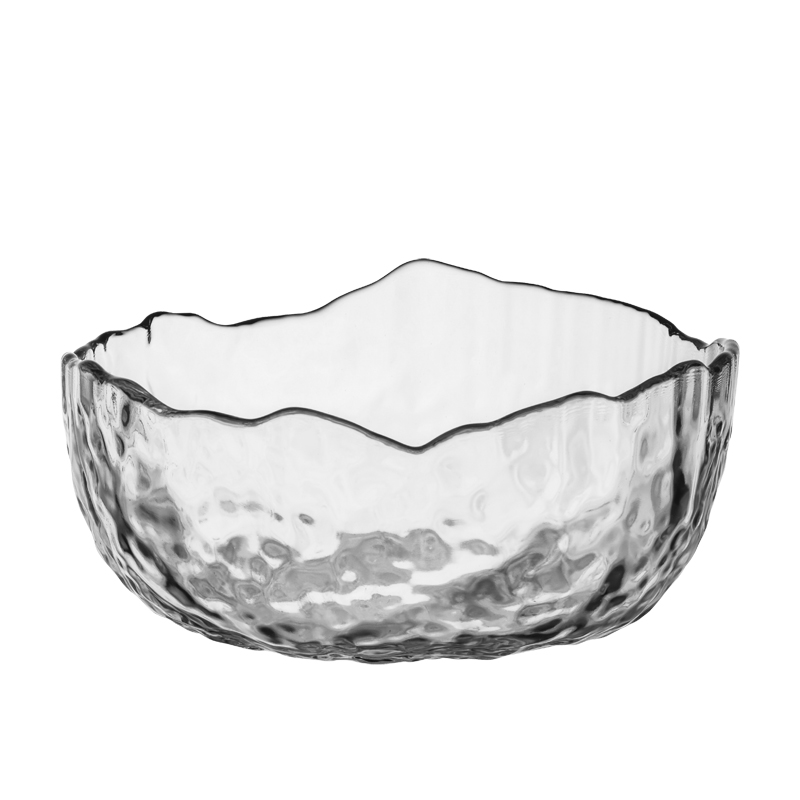
Kitchen cabinets often hold dozens of unmarked containers. Discarding them is entirely unnecessary if you test them properly. We provide a strict, actionable standard operating procedure. Use it to evaluate unknown kitchen inventory safely.
Step 1: Visual and Tactile Audit. Turn the container over entirely. Check the base for official manufacturer stamps. Look for specific wave lines or explicit "Microwave Safe" text. Next, carefully inspect the rims. Run your finger along the base to feel for small chips. Search closely for hairline fractures under good lighting. Reject anything displaying metallic rims or gold-leaf painted decorations.
Step 2: The 1-Minute Water Cup Test. You can perform this proven diagnostic safely at home.
The Setup: Place the empty test container inside your appliance. Place a separate, known-safe vessel filled with water right next to it.
The Execution: Run the appliance on high power for exactly 60 seconds.
The Verdict: Carefully touch the empty test vessel. If it remains completely at room temperature, it does not absorb microwaves. It is safe to use. If it feels warm or excessively hot, it contains reactive chemical materials. You must disqualify it immediately.
Step 3: Establish Strict Usage Boundaries. Passing the diagnostic test is not a universal free pass. You must still relegate these unmarked containers to specific, low-risk tasks. Use them for short-burst reheating only. Do not use them for prolonged cooking sessions.
Relying solely on brand names instead of specific model numbers.
Testing containers holding completely dry food.
Ignoring tiny rim chips to save money on replacements.
Assuming heavy or thick walls automatically indicate higher heat tolerance.
Knowing your material composition is only half the battle. You must also implement safe daily operational guidelines. Following these exact safety protocols prevents unexpected threshold failures.
Standardized manufacturer guidelines offer clear operational boundaries. They suggest capping exposure for standard Glassware at under three continuous minutes. Pushing past this designated limit greatly increases your risk of thermal failure. Break longer heating tasks into much shorter intervals. Stir your food thoroughly between bursts. This promotes even heat distribution and protects the container base.
You must account for secondary heat transfer risks. The radiation itself does not heat the vessel. However, boiling liquids absolutely do. The hot meal transfers thermal energy directly to the structural walls. The vessel becomes dangerously hot within seconds. Always use proper heat protection. Thick oven mitts prevent sudden drop-hazards and severe palm burns. Never grab a boiling vessel barehanded.
Consumers often wonder why they should bother avoiding plastics. The alternatives present significant, documented health dangers. Standard plastic containers warp and melt under sustained heat. Furthermore, they leach dangerous chemicals like BPA and phthalates directly into your food. Styrofoam performs even worse. It breaks down chemically when exposed to cooking fats. Contrasting this, verified glass offers unmatched chemical stability. It preserves the integrity and flavor of your meals perfectly.
Standardizing your kitchen with verified borosilicate or intact tempered options remains your best choice. It represents the safest long-term investment for daily food preparation. It completely eliminates the chemical risks associated with plastics. It also provides unmatched durability. Your next steps are incredibly straightforward. First, audit your current pantry shelves. Discard any chipped or visibly cracked items immediately. Next, verify the manufacturer labels on your heavy-use containers. Finally, perform the 1-minute water diagnostic on your legacy items. Taking these deliberate actions ensures every meal you reheat remains entirely safe.
A: No. Unless explicitly rated for freezer-to-microwave transitions, the rapid thermal shock will likely shatter the glass. Let it rest at room temperature first.
A: Generally, no. The dyes or metallic elements used to tint the glass can heat unevenly or spark.
A: Even microwave-safe glass can explode if it is subjected to severe thermal shock, dry-heated past the evaporation point of the food, or if it harbored an invisible microfracture prior to heating.
A: Not inherently. Oven heat is ambient and gradual, whereas microwaves excite water molecules rapidly. Always verify both labels independently.


