
Views: 0 Author: Site Editor Publish Time: 2026-09-21 Origin: Site


Glassware design goes far beyond simple aesthetics. It represents a deliberate engineering choice. Thermodynamics, beverage volume, and sensory delivery dictate these specific design choices. You might assume any basic cup will serve your purpose. However, picking the wrong vessel easily ruins the drinking experience. For buyers outfitting a home bar, launching a commercial cafe, or sourcing promotional drinkware, understanding these structural nuances remains critical. You need to prevent dangerous breakage, elevate user enjoyment, and avoid poor inventory investments. This guide breaks down the physical differences between beverage-specific glass mugs. We provide a clear framework for evaluating the exact materials and shapes you need. You will discover how heat transfer dictates glass thickness and why bowl geometry influences flavor perception.
Thermodynamics Dictate Thickness: Beer mugs prioritize high mass to maintain low temperatures, while coffee and tea mugs require thermal shock resistance (e.g., borosilicate glass) to handle rapid temperature spikes.
Geometry Impacts Flavor: Wide brims on tea cups allow rapid cooling and aroma dispersion; tall, narrow beer mugs preserve carbonation.
Material Trumps Shape for Hot Drinks: Using standard soda-lime glass for hot coffee invites shattering; identifying the correct glass type is the most critical evaluation step.
Ergonomics Vary by Beverage: Handle designs directly correspond to the weight of the liquid and the required distance from extreme temperatures.
When you evaluate various types of glass mugs, you quickly realize form strictly follows function. The core challenge begins with temperature management. You must keep craft beer ice-cold without transferring heat from your hand. Conversely, coffee and tea need to remain hot without burning your fingers. These opposing thermal demands require completely different structural approaches. Designing a vessel to manage heat transfer effectively dictates everything from the rim thickness to the base weight.
Next, sensory and mechanical requirements heavily influence the engineering process. Carbonation retention matters immensely for beer consumption. You need a specific surface-area-to-volume ratio to keep bubbles active and foamy. A tall, narrow interior minimizes liquid exposure to the air. Aroma release matters much more for tea and coffee. A wider surface area lets fragrant steam reach your olfactory sensors before you even take a sip. You experience the beverage through smell before taste. The glass geometry directly controls this sensory delivery.
Finally, physical durability and everyday stress dictate manufacturing choices. Glassware endures harsh, extreme environments daily. Chilled beer steins face freezing temperatures in commercial bar coolers. Morning coffee vessels endure violent boiling water pours directly from espresso machines. Later, they all must survive aggressive commercial dishwasher sanitation cycles. These cycles combine scaling water temperatures with highly caustic detergents. Understanding these stress points helps you prevent catastrophic failures during busy service hours.
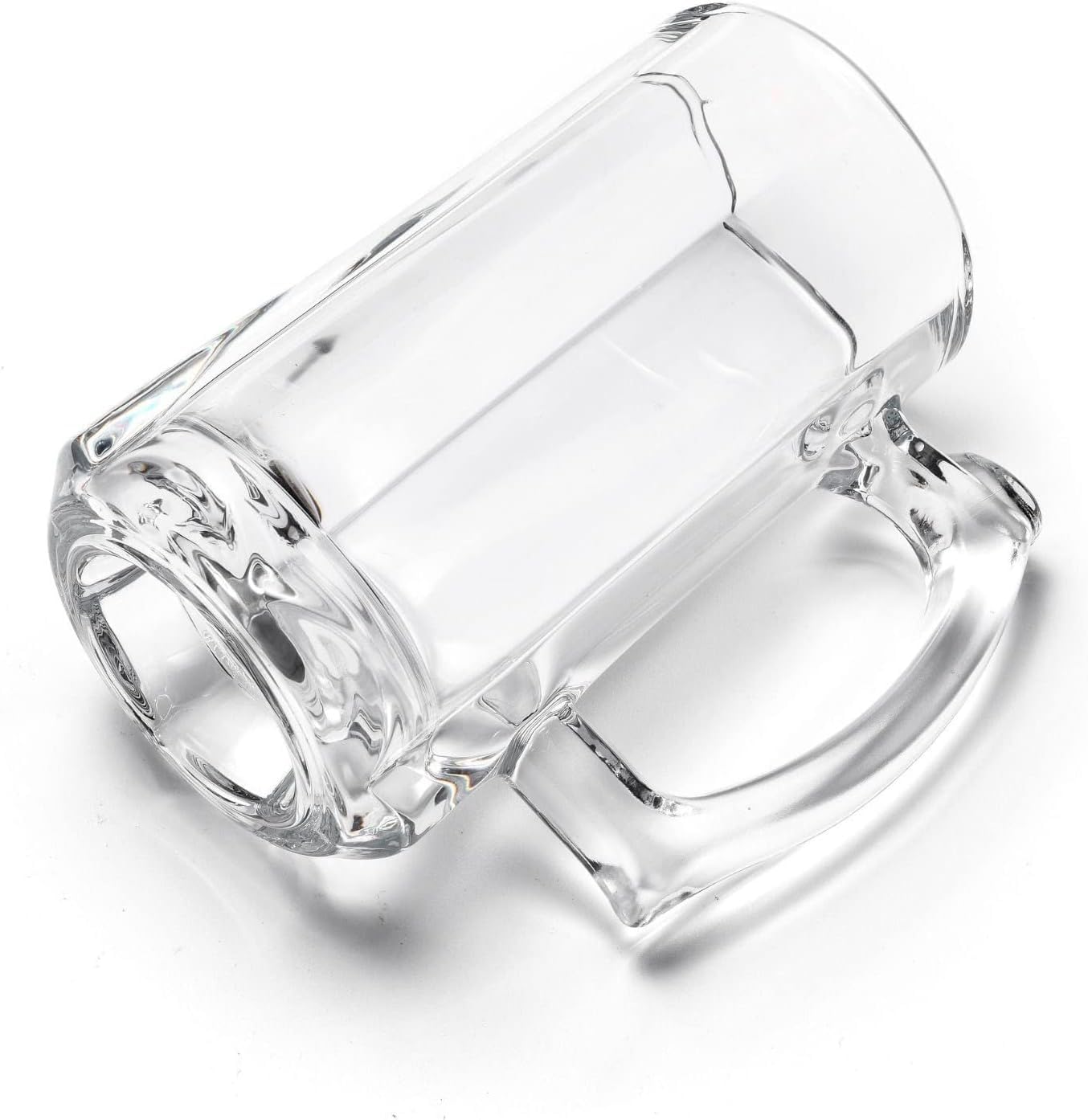
Brewers and bar owners favor extra-thick glass walls for their service vessels. This high glass mass insulates the cold beverage perfectly. It blocks ambient room heat from penetrating the liquid. It also shields the cold drink from your warm hands. Heavy glass provides incredibly satisfying tactile feedback during celebratory toasts. The substantial weight feels premium and robust in the user's hand.
Handle architecture requires special attention in this category. Oversized handles accommodate a full, closed-fist grip. This secure grip proves essential for stabilizing 16 to 24 ounces of heavy liquid. You can hold the drink firmly without ever touching the main glass bowl. This ergonomic separation maintains the optimal chilled temperature longer.
Base design and surface texture serve highly functional purposes. Heavy, widened bases prevent accidental tipping on wet, slippery bar counters. Dimpled textures, popular in traditional British pub environments, reduce the exact surface area contacting your fingers. This smart texture limits heat transfer while enhancing visual light refraction. It makes amber ales and lagers look vibrant and glowing. When sourcing glass beer mugs, always prioritize these hefty, durable structural elements.
Best Practice: Always store beer steins upside down on breathable mats to prevent rim chipping.
Common Mistake: Stacking heavy-handled steins inside one another guarantees inevitable handle fractures.
Hot bean extractions demand specific cylindrical shapes. Tall, relatively narrow sides reduce the exposed liquid surface area. This precise geometry prevents precious heat from escaping too rapidly into the air. You enjoy a hot beverage from the first sip to the last drop. The straight walls also help baristas pour latte art effectively.
Among hot beverage containers, double-wall glass mugs represent the undeniable gold standard. They feature a sealed, vacuum-insulated gap between two delicate glass layers. This clever thermal design eliminates external condensation completely. It also keeps the exterior pleasantly cool to the touch. You get maximum visual appeal without risking burned fingers. Customers love seeing the rich crema floating visibly inside the floating inner wall.
Material durability remains a non-negotiable safety factor. Any vessel holding hot coffee must utilize tempered or borosilicate materials. Pouring 200°F water into a standard untreated cup invites instant shattering. We strongly recommend verifying strict thermal ratings before purchasing any glass coffee mugs for daily use. Do not risk customer safety for a cheaper unit price.
Tea demands a vastly different bowl geometry compared to coffee. These specialized vessels typically appear much wider and shallower. This intentional shape allows delicate tea leaves ample room to expand during steeping. It also helps the boiling liquid reach a comfortable, safe drinking temperature much faster. You avoid scalding your tongue on delicate herbal blends.
Lip flaring plays a crucial role in overall taste perception. Thinner, outwardly flared rims direct the hot liquid precisely to specific palate zones. They encourage gentle, delicate sipping rather than aggressive gulping. This nuanced delivery highlights the subtle floral notes found in premium loose-leaf teas.
We cannot ignore the functional pairings of the complete set. Sourcing proper glass tea cups with saucers provides multiple operational benefits. The saucer acts as a reliable thermal barrier, protecting wooden café tables from heat damage. It effectively catches errant drips before they stain linens. It also provides a designated resting place for stirring spoons, sugar cubes, or discarded tea bags.
Knowing the basic styles helps, but evaluating the underlying structural features guarantees long-term success. Let us explore the technical criteria you should review before making a bulk purchase. Form alone does not equal function in busy environments.
Material composition stands out as your primary safety check. You must evaluate the maximum thermal shock threshold. Standard soda-lime glass offers a highly cost-effective solution for chilled drinks. However, it becomes downright dangerous for hot coffee pours. Borosilicate glass remains strictly mandatory for any high-heat applications. It contains boron trioxide, which stops the glass from expanding rapidly. It handles sudden temperature fluctuations gracefully without fracturing or exploding.
Volume and headspace capacity closely dictate the user experience.
Beer Capacity: Servings require 16 to 20 ounces of total volume. They also need extra vertical headspace to accommodate foam settling. Proper foam protects the beer from oxidation.
Coffee/Tea Capacity: These typically range from 8 to 12 ounces. Specifying an oversized cup for tea leads to premature liquid cooling. The beverage goes unpleasantly cold before the user finishes drinking it.
Optical clarity and maintenance directly affect your long-term presentation. You must rigorously assess how transparency degrades over time. High-quality glassware actively resists etching, scratching, and chemical clouding. Repeated commercial dishwasher cycles use extremely harsh, abrasive detergents. Cheap glass turns hazy and opaque quickly. This visual degradation forces early replacements, ruining your initial cost savings.
Buying glassware involves distinct logistical realities. Storage footprints and daily handling procedures present unique challenges for operators. You must plan for where these items will live when not in active use.
First, objectively assess stackability and shelf efficiency. Thick beer steins require massive amounts of dedicated shelf space. They rarely stack safely due to their protruding heavy handles. Attempting to stack them often leads to chipped rims. Meanwhile, delicate tea sets require specialized partitioned rack storage to keep the fragile saucers intact. You must measure your available cabinet space before ordering bulk quantities.
Breakage rates directly impact your operating margins. We often see busy commercial environments struggle with fragile inventory. Vacuum-insulated designs offer superior heat retention and gorgeous modern aesthetics. However, they remain notoriously fragile compared to solid pressed glass. They carry a much higher replacement rate in fast-paced kitchens. Busboys and dishwashers easily crack them if they drop them even an inch into a sink.
Finally, corporate branding initiatives require careful logistical planning. When buying custom glass mugs, evaluate your customization methods closely.
Laser Engraving: This provides a permanent, opaque frosted look that never washes off. It damages the surface slightly to create the image.
Screen Printing: This offers vibrant color options for logos. Sadly, printed decals remain highly susceptible to fading under harsh dishwashing chemicals.
Firing/Baking: Some manufacturers fire the decals into the glass surface. This method costs more but ensures dishwasher longevity.
Always identify minimum order quantities (MOQs) upfront. Ask for physical samples to mitigate quality control risks before committing to large hospitality orders. Check the clarity of the logo after running the sample through your own dishwasher.
Making the final choice requires aligning glass specifications directly with your exact operating environment. You cannot take a one-size-fits-all approach to beverage service.
For High-Volume Hospitality and Busy Bars:
Prioritize thick-walled, tempered soda-lime models for maximum survival.
Optimize for rugged durability over intricate, delicate aesthetics.
Choose designs that offer the lowest replacement costs per unit.
Select models with extra-sturdy bases to prevent accidental spills during chaotic service.
For Specialty Cafes and Boutique Tea Rooms:
Invest heavily in premium borosilicate materials.
Utilize elegant tea sets or modern double-wall coffee models to impress guests.
Prioritize the visual presentation of beautifully layered espresso drinks.
Ensure absolute thermal safety for customers holding the hot vessels.
For Custom and Promotional Drinkware Buyers:
Select standard, single-wall tempered coffee models for broad appeal.
Maximize the flat surface area available for seamless logo printing.
Balance structural integrity against expensive pallet shipping costs.
Choose universally recognized shapes to ensure broad user acceptance.
Beverage Category | Ideal Material Type | Primary Geometry | Key Performance Goal |
|---|---|---|---|
Draft Beer | Soda-Lime (Extra Thick) | Tall, Cylindrical, Heavy Base | Cold Insulation & Carbonation Retention |
Hot Coffee | Borosilicate / Tempered | Narrow Cylinder | Heat Retention & Safe Hand Grip |
Loose Leaf Tea | Borosilicate | Wide Bowl, Flared Rim | Rapid Cooling & Optimal Aroma Release |
The functional distinction between beer, coffee, and tea mugs remains deeply rooted in basic physics. Designers must actively manage heat transfer, structural weight, and complex sensory delivery. You simply cannot swap vessels interchangeably without severely compromising the beverage. Pouring hot espresso into a chilled beer stein ruins both the drink and the glass.
We reiterate the critical importance of precisely matching the glass material to the thermal demands of your drink. Prioritizing borosilicate glass for boiling liquids ensures both consumer safety and product longevity. Standard soda-lime glass serves perfectly for chilled beverages but fails miserably under extreme heat stress. Recognizing this difference saves you from dangerous accidents.
Finally, we strongly encourage buyers to carefully balance aesthetic appeal against practical realities. Beautiful vacuum-insulated designs look striking sitting on a dining table. Yet, their fragility might not suit a chaotic commercial kitchen environment. Evaluate your specific storage constraints, replacement budgets, and daily usage patterns. Use this analytical framework before finalizing your major glassware investment.
A: No. Most glass beer mugs are made from non-tempered soda-lime glass. They will likely shatter instantly due to thermal shock when exposed to boiling liquids. Always check the thermal rating before pouring hot drinks.
A: They feature a vacuum layer trapped between two sheets of borosilicate glass. This gap provides superior thermal insulation. It keeps the drink piping hot while ensuring the exterior stays completely cool, preventing burnt fingers.
A: A saucer protects table surfaces from damaging heat rings. It effectively catches drips from thin-rimmed cups. It also provides a sanitary resting place for stirring utensils and adds a stable base for carrying wide cups.
A: You must verify the manufacturer’s exact specifications. While the glass itself may survive, printed decals or logos often degrade under high heat and heavy detergents. Ensure the branding is fired-on or permanently engraved.


