
Views: 0 Author: Site Editor Publish Time: 2026-09-26 Origin: Site


Procuring glassware demands a precise strategic balance. You must weigh premium brand perception against operational unit economics. Replacement costs, long-term durability, and supply scalability dictate your true bottom line. Ordering bulk inventory without a solid structural framework carries massive business risk. Buyers frequently encounter high transit breakage rates. You might receive shipments featuring unexpectedly fading custom prints. Mismatched venue requirements can disrupt daily operations entirely. Bartenders struggle when cups do not fit standard racks. We designed this comprehensive guide as a definitive decision-stage blueprint. You will learn how to evaluate specific material compositions accurately. We will outline common customization limits clearly. You will discover critical supplier reliability benchmarks to audit. You can secure superior terms easily. This structural approach protects your profit margins immediately. You will eliminate costly blind spots before you sign your next purchase order.
Match material specifications directly to venue constraints (e.g., stackability for high-volume bars, polycarbonate for outdoor safety).
Verify supplier customization capabilities against your required Minimum Order Quantities (MOQs) and lead times.
Always calculate Total Landed Cost, factoring in freight, packaging, and guaranteed breakage allowances, rather than just the per-unit price.
Require physical sampling and verifiable compliance documentation (FDA/LFGB) before full-scale rollouts.
To establish clear commercial success criteria, you must define the end-use environment perfectly. Retail buyers look for shelf appeal and attractive consumer packaging. Hospitality operators demand rigorous physical durability to survive daily abuse. Promotional campaigns prioritize low unit costs and maximum logo visibility above all else. Sourcing appropriate Wholesale Drinking Glasses requires aligning product specifications to these distinct commercial realities.
High-volume bars and busy restaurants subject inventory to extreme mechanical stress. Staff members cycle cups through commercial dishwashers dozens of times daily. You must prioritize stackable designs above intricate aesthetics here. Stackability saves limited under-counter bar space remarkably well. It accelerates service speed during peak weekend shifts.
Furthermore, thermal shock resistance prevents shattering during rapid temperature changes. Think about pulling a warm cup directly from the dishwasher. Pouring a cold draft beer into it immediately causes immense structural stress. Standard glass often cracks under these rapid thermal shifts.
Nucleated bases offer another specialized profile for busy pubs. Manufacturers laser-etch tiny grooves into the inside bottom surface. These microscopic grooves stimulate continuous carbonation release. They maintain a thick, visually appealing foam head on craft beers longer. This small detail enhances the customer tasting experience significantly.
Fine dining establishments require an entirely different procurement approach. You should prioritize optical clarity and extreme rim thinness. Weight distribution also matters immensely for high-end dining experiences. A heavier, solid base implies luxury and table stability. A delicate, laser-cut rim enhances wine tasting profiles noticeably.
However, buyers must conduct a strict operational trade-off analysis. Higher aesthetic value usually guarantees increased replacement frequency. Thin rims chip easily during manual polishing by bussers. You should budget for higher attrition rates in fine dining environments. The elevated menu prices generally justify this increased glassware overhead.
Poolside venues and eco-conscious industrial sites face strict liability concerns constantly. Broken shards near a swimming pool cause massive operational disruptions. A single accident can trigger severe legal liabilities. You must evaluate shatterproof alternatives carefully for these zones.
Polycarbonate and Tritan plastics mimic optical clarity perfectly. They eliminate safety compliance risks entirely. They ensure guests remain safe even while walking barefoot. Eco-conscious buyers might also explore recycled industrial materials. Always verify local municipal health codes regarding outdoor serveware before buying large volumes.
Selecting the correct material composition directly influences your long-term return on investment. Different manufacturing compounds offer specific advantages regarding safety and lifespan. You must match the material chemistry to your venue's daily operational rhythm.
Soda-lime glass serves as the undisputed industry standard globally. It offers incredibly cost-effective manufacturing for daily-use items. You will find it in diners, pubs, and casual restaurants everywhere. It provides excellent baseline durability against physical impacts. It resists etching from harsh commercial detergents quite well over time. If you need standard, reliable Wholesale Drinking Glasses, this material delivers consistent performance.
Upscale brands rely heavily on lead-free crystal for premium brand positioning. Traditional crystal contains lead oxide to achieve brilliant light refraction. Modern health regulations prohibit this for commercial food service globally. Lead-free crystal substitutes barium or zinc oxide during the melt. These minerals maintain high refractive indexes perfectly. They also produce that satisfying acoustic ring when clinking. You must demand verifiable "lead-free" certifications from overseas manufacturers. Unverified imports can trigger severe health compliance penalties at customs.
Cafes and dual-use venues often require specialized borosilicate options. This material excels at handling extreme thermal resistance daily. It expands minimally under severe heat stress. You can pour boiling espresso into a cold borosilicate cup safely. Standard soda-lime would likely shatter instantly under identical conditions. Borosilicate costs more upfront. However, it reduces heat-related breakage to near zero over a fiscal year.
Material Durability and Replacement Projection Matrix
Material Type | Initial Unit Cost Level | Thermal Shock Resistance | Typical Annual Attrition |
|---|---|---|---|
Standard Soda-Lime | Low | Moderate | 15-20% |
Lead-Free Crystal | High | Low | 25-30% |
Borosilicate | Medium-High | Very High | 5-10% |
Polycarbonate (Plastic) | Medium | Extreme | 2-5% (Scratches) |
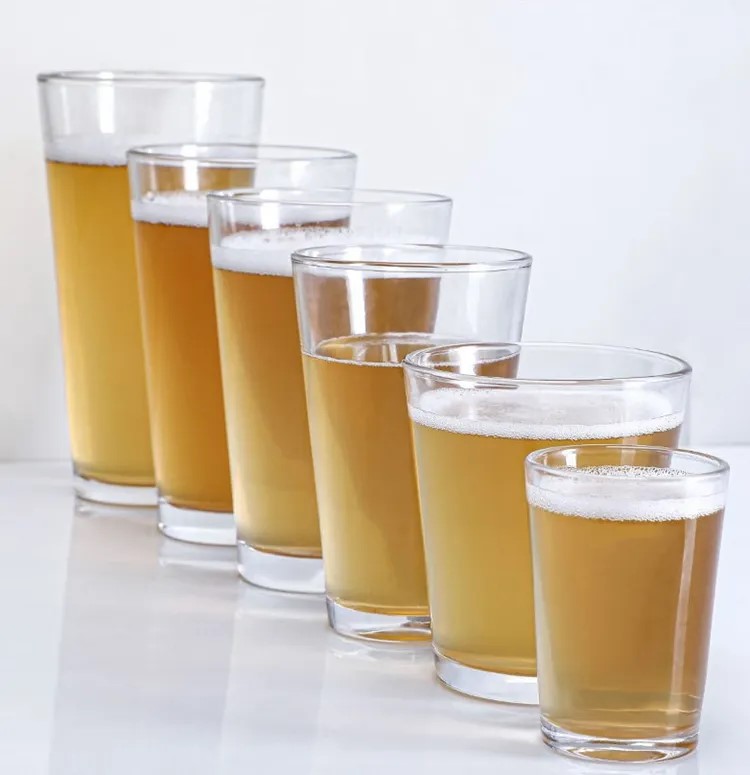
Brands often use customized drinkware to build consumer recognition rapidly. However, various branding techniques impose unique physical limitations. You must navigate these technical realities carefully before finalizing designs.
Decal printing and silk screening dominate bulk customization orders. Silk screening forces ink directly through a mesh stencil onto the surface. It provides excellent color-matching fidelity for distinct corporate logos. High-temperature firing then cures the ink permanently into the surface.
Decal printing involves applying a pre-printed transfer manually. It allows for more complex, multi-color gradient designs. You must compare durability against commercial washing cycles critically. High-fire decals generally resist fading better than low-cure silk screens. Organic inks match Pantone colors perfectly but wash off faster. Inorganic inks last forever but shift color slightly during kiln firing.
Laser etching removes a microscopic layer of surface material. It creates a permanent, elegant frosted appearance. This technique suits low-volume, premium corporate gifting programs perfectly. High-end hospitality venues also utilize it for subtle base branding. The mark never fades or washes off in commercial dishwashers.
However, laser engraving requires a significantly higher cost-per-unit. The mechanical process runs slower than bulk ink printing. It also lacks color capabilities entirely. You only get the frosted white tone of etched material.
Creating bespoke shapes requires dedicated custom tooling and molds. You face significant financial reality checks here. Custom mold fees often run into thousands of dollars upfront. You must outline typical timeline expectations carefully with stakeholders. Moving from a digital CAD design to a 3D prototype takes weeks. Creating the actual steel production mold requires another full month. Mass production adds even more lead time to your calendar. Only pursue bespoke shapes if your brand demands true structural exclusivity.
Customization methods dictate Minimum Order Quantities (MOQs) strictly. Silk screening on stock blanks might require only 500 units. Custom molds routinely demand MOQs exceeding 10,000 units. Factory tooling setup times determine these strict production thresholds. We advise buyers to negotiate paid pilot runs whenever possible. A small pilot batch validates the physical design safely. You can test market reception before committing massive capital to inventory.
Procurement success depends heavily on factory reliability and logistics planning. Shoddy logistics can destroy favorable unit economics instantly upon delivery.
Transit breakage destroys profit margins silently and quickly. You must instruct suppliers on specific packing protocols explicitly. Demand clear Service Level Agreements (SLAs) regarding allowable transit breakage. A standard 2-3% allowance is common for rough ocean freight. Hold suppliers accountable for required replacements beyond this acceptable threshold.
Evaluate palletizing standards rigorously before shipment. Ensure factories use multi-layer, heavy-duty corrugated export boxes. Ask them to perform documented drop-test standards before loading shipping containers.
Global markets enforce strict food-contact regulations universally. You should maintain deep skepticism toward vague "food safe" claims. These frequently appear on generic wholesale portal listings. Always require verifiable, third-party laboratory documentation. Demand current FDA compliance certificates for United States markets. European buyers must secure specialized LFGB testing reports. These documents prove the complete absence of heavy metals like cadmium. Uncertified goods risk customs seizures and brand-damaging health liabilities immediately.
Supply chain scalability separates average factories from truly great partners. Assess the supplier's ability to handle seasonal demand spikes accurately. Can they surge production before major summer holidays? Consistent restocks must not suffer from slow quality fade. Some suppliers substitute cheaper raw materials on subsequent follow-up orders. You must mandate strict adherence to original approved specifications. Enforce this for every single batch they produce for you.
Finalizing a supplier requires disciplined auditing and structured evaluation. Do not rely solely on heavily edited digital photos or catalogs.
Physical samples reveal hidden manufacturing flaws rapidly. We recommend actionable steps for testing any physical sample.
Run the sample through twenty commercial dishwasher cycles consecutively to check for premature clouding.
Conduct a rigorous scratch test using standard metal cutlery to simulate aggressive table wear.
Apply strong adhesive tape over printed logos and rip it off rapidly to test print adhesion.
Measure maximum liquid capacity accurately to ensure it matches your exact menu pour sizes.
Comparing quotes accurately requires a comprehensive mathematical framework. Do not just look at the raw Ex-Works base unit price. Total Landed Cost Analysis incorporates every hidden logistical fee. You add the base unit price, custom tooling, and packaging upgrades first. Then, you calculate domestic freight, ocean shipping, and estimated import tariffs. Finally, you factor in projected breakage percentages. Sourcing Wholesale Drinking Glasses locally might look expensive initially. However, cheaper overseas options often equalize quickly. They lose their advantage once you add massive freight and tariff burdens.
Define the ideal payment terms upfront in your contract. Standard international B2B terms usually involve a 30% initial deposit. You pay the remaining 70% balance just before final shipment. Establish strict quality control (QC) inspection checkpoints clearly. We highly recommend hiring independent third-party pre-shipment inspectors. They visit the factory and check goods before container loading begins. This protects your first wholesale order from catastrophic quality failures. They verify Acceptable Quality Limit (AQL) standards thoroughly on your behalf.
Sourcing bulk drinkware is about aligning physical product limitations with operational realities. You must balance brand aesthetics against the brutal environment of commercial usage. Remember these core takeaways before making a final vendor decision. First, always prioritize safety and long-term durability over simple visual appeal. Second, lock down your Total Landed Cost math to avoid nasty budget surprises. Third, protect your investment through rigorous sample testing and third-party factory inspections.
Your next step is highly actionable and simple. Consolidate your technical requirements on paper clearly. Detail the exact liquid capacity, preferred material, branding type, and projected monthly volume. Once you finalize this brief, you can confidently send your first structured Request for Quote (RFQ).
A: Standard MOQs depend heavily on the specific customization method used. For basic decal printing or silk screening on stock items, factories typically require 500 to 1,000 units. If you need bespoke shapes requiring custom molds, expect MOQs to start at 10,000 units or more.
A: The industry standard includes a 2-3% allowable breakage rate for international ocean freight. Factories usually provide a slight unit overage to cover this expected loss. For breakage exceeding this threshold, buyers must submit photographic proof upon delivery to claim credits on future orders.
A: Exact Pantone matching remains challenging. Organic inks allow for precise color matching but fade faster in commercial dishwashers. Inorganic glass inks offer permanent durability but change color slightly during high-temperature kiln firing. Factories can get close, but identical matches are technically limited.
A: Soda-lime is the standard, cost-effective option used for everyday cold beverages and general dining. Borosilicate glass costs more but offers extreme thermal shock resistance. Venues use borosilicate specifically for hot beverages, preventing shattering when exposed to rapid temperature changes.


