
Views: 0 Author: Site Editor Publish Time: 2026-09-13 Origin: Site


Sourcing branded drinkware might seem straightforward at first glance. However, looking at a simple base per-unit price often misleads buyers. Project managers routinely get derailed by unexpected setup fees, heavy shipping weights, and standard breakage allowances.
Accurate budgeting requires you to calculate the complete landed expense rather than just the initial quote. You must factor in manufacturing processes, decoration choices, freight logistics, and quality assurance measures. Otherwise, hidden charges will quickly consume your entire profit margin.
This article provides a transparent, evidence-based breakdown of what drives a realistic Custom Glassware Cost. You will learn how to evaluate supplier quotes thoroughly and spot hidden commercial risks before signing a contract. Ultimately, you will gain the knowledge needed to secure high-quality products on budget.
Baseline Ranges: Custom glassware costs typically range from $1.50 to $15.00+ per unit, heavily dependent on the base vessel and decoration method.
Volume dictates price: Economies of scale significantly lower per-unit costs, but Minimum Order Quantities (MOQs) restrict lower-budget flexibility.
The Shipping Variable: Because glass is heavy and fragile, freight and protective packaging can add 15–30% to the total project cost.
Hidden Fees to Watch: Setup fees, multi-color print charges, and rush production timelines are the most common budget disruptors.
Understanding industry averages helps you immediately evaluate whether a supplier quote is competitive. Standard industry pricing relies heavily on the specific vessel type. We base the following estimates on standard minimum order quantities. Purchasing smaller batches will drive these averages higher. Purchasing larger bulk orders will pull the averages lower.
Baseline Cost Brackets for Standard Orders
Category | Product Examples | Estimated Unit Price | Best Use Case |
|---|---|---|---|
Standard Drinkware | Pint glasses, shot glasses, basic tumblers | $1.50 – $4.00 | High-volume promotional events, casual hospitality |
Premium Specialty | Stemless wine, craft beer snifters, rocks glasses | $4.00 – $8.00 | Retail merchandise, mid-tier hospitality venues |
Luxury & Crystal | High-end wine, specialized cocktail coupes | $8.00 – $15.00+ | Premium corporate gifting, VIP events, fine dining |
Standard drinkware offers the most cost-effective entry point. Factories produce pint glasses and basic tumblers rapidly using automated machinery. This keeps the baseline expense very low. These items serve perfectly for casual restaurants or large promotional giveaways.
Premium specialty vessels require more refined molds. Craft beer snifters and rocks glasses use thicker bases. They also require better clarity. You pay a slight premium for this upgraded presentation. These options work best for retail shelves or upscale bars.
Luxury and crystal items sit at the top tier. Fine dining establishments and corporate VIP programs demand flawless clarity. Manufacturers often blow these pieces by hand or use specialized lead-free crystal formulas. This meticulous production justifies the premium price tag.
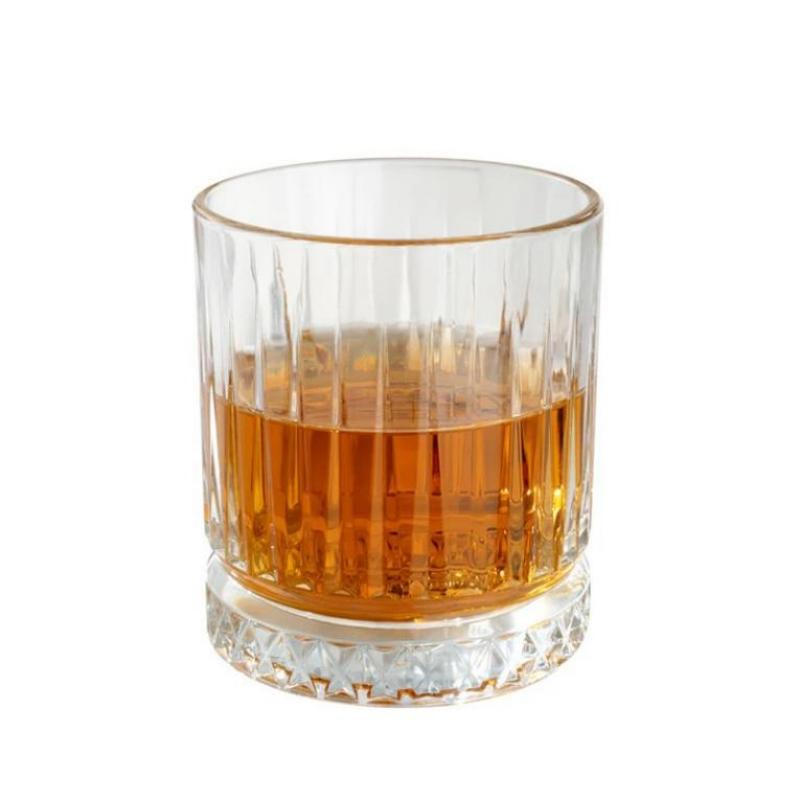
Several distinct product choices dictate your final invoice. The base material serves as the starting point. Most promotional drinkware uses machine-made soda-lime glass. It is durable and highly affordable. Conversely, premium lead-free crystal elevates the drinking experience. It refracts light beautifully. However, crystal requires slower manufacturing cycles. This significantly increases your baseline expense.
Decoration methods also play a major role in pricing. Different techniques suit different artwork styles and budgets. Consider the following standard methods:
Screen Printing: This remains the most cost-effective option for bulk orders. Suppliers charge a setup fee per color. Simple one-color logos keep expenses very low.
Laser Engraving: Etching creates a permanent, elegant mark. It carries a higher perceived value. While the baseline expense is higher, you avoid per-color fees entirely.
Decal/Transfer Printing: This method handles complex, full-color art perfectly. Technicians print the design on a decal. They then manually apply it to the vessel before firing. This intense manual labor increases the overall price.
Print placement introduces another pricing variable. Printing a single logo on one flat side keeps production simple. Multi-sided printing requires technicians to rotate the piece during production. This slows down the line. Furthermore, printing on curved or irregular surfaces demands specialized tooling. Facilities must calibrate their machines precisely to avoid distortion. This extra calibration directly increases the total project expense.
Ordering volume completely alters your budget predictability. The financial mechanics of custom manufacturing heavily favor larger runs. Understanding this helps you optimize your purchasing strategy.
Every custom order incurs fixed setup costs. Facilities must create screens, digitize artwork, and configure machines. Let us assume your setup fee totals $150. If you order 50 units, you add $3.00 to the cost of every single piece. If you order 1,000 units, that same setup fee adds only $0.15 per piece. Amortizing these fixed costs across a larger volume dramatically lowers your per-unit price.
Suppliers enforce standard Minimum Order Quantities (MOQs) to protect their margins. They cannot afford to stop production lines for a dozen cups. Typical industry MOQs sit at 36, 72, or 144 units. Highly customized shapes might require MOQs in the thousands.
Buyers frequently debate whether to order a short run or invest in bulk. We recommend using the following framework to decide:
Assess your capital limits: Do you have the cash flow to support a massive bulk purchase upfront?
Calculate your storage capacity: Warehousing bulky pallets costs money. Ensure you have the physical space to store a large run safely.
Evaluate design longevity: Will your logo or event branding change next year? Short runs mitigate the risk of obsolete inventory.
Analyze the per-unit savings: Compare the exact quotes. If doubling your order drops the unit price by 40%, the bulk investment usually makes sense.
Initial quotes rarely tell the whole story. You must adopt a skeptical, risk-aware approach when reviewing vendor proposals. Many hidden fees only appear on the final invoice. Knowing what to look for builds trust between you and your supplier.
Freight logistics represent the biggest budget disruptor. Glass is exceptionally dense. It is also incredibly fragile. Carriers price shipments based on dimensional weight and freight classification. A pallet of drinkware takes up significant space and requires careful handling. Palletized Less Than Truckload (LTL) shipping can drastically alter your final expenses.
You must also account for shrinkage. Shipping glass inherently carries risks. Standard industry breakage rates usually hover between 2% and 5%. Experienced buyers always over-order slightly. Adding a 5% buffer guarantees you have enough perfect units for your event.
Setup fees and color matching frequently surprise new buyers. Facilities charge standard screen fees. These often range from $40 to $60 per color. If your brand guidelines require strict Pantone (PMS) matching, expect an additional fee. Technicians must manually mix inks to hit exact brand shades.
Common Hidden Fees in Drinkware Production
Fee Type | Typical Cost Range | How to Mitigate It |
|---|---|---|
Screen/Setup Charges | $40 – $60 per color | Consolidate designs to 1 or 2 colors. |
PMS Color Matching | $20 – $50 per shade | Use standard stock ink colors when possible. |
LTL Freight Surcharges | Varies by dimension/weight | Request a landed quote including shipping early on. |
Rush Production | 20% – 50% total bill surcharge | Plan projects 6-8 weeks in advance. |
Finally, avoid rush fees at all costs. Expediting production forces the factory to rearrange their schedule. This convenience will easily add 20% to 50% to your total bill.
Comparing multiple vendor quotes requires a disciplined approach. Do not simply choose the lowest bottom-line number. You must verify quality, safety, and reliability. We recommend following a strict decision-stage checklist.
First, review their sample policies. Always demand pre-production proofs. A reputable vendor provides digital mockups for free. They should also offer physical pre-production samples. Some suppliers charge a fee for physical samples. This fee is well worth the investment to verify print quality before full production begins.
Second, demand safety compliance. This represents a crucial quality standard. Ensure the vendor uses FDA-compliant materials. If you operate in California, verify strict Prop 65 compliance regarding heavy metals like lead and cadmium. You should also confirm they use dishwasher-safe inks. Low-quality organic inks will wash off after a few cycles. High-quality kiln-fired ceramics ensure permanence.
Third, evaluate their replacement policies. Accidents happen during transit. Assess how the vendor handles damaged goods. Will they replace items broken in transit? Will they refund you for obvious print defects? Get these guarantees in writing before issuing a purchase order. Sourcing reliable Custom Glassware demands accountability from your manufacturing partner.
Securing the best price for your drinkware requires looking far beyond the base unit price. You must calculate freight, anticipate setup fees, and plan for inevitable breakage. A cheap cup becomes incredibly expensive if the ink washes off or half the pallet shatters in transit.
Your next steps are clear. Finalize your artwork to determine your exact color count. Calculate your actual volume needs while factoring in a 5% breakage allowance. Then, request an itemized quote that includes freight costs.
Taking a proactive approach guarantees a smoother procurement process. Reach out to a verified supplier today. Request a custom quote, order a physical sample kit, and secure high-quality items that perfectly reflect your brand identity.
A: Generally, exact reorders feature waived or significantly reduced setup fees. The factory already digitized your artwork. However, you might still face minor screen reset charges. Factories must physically clean and mount the screens onto the machinery again for your new run.
A: Engraving usually costs more upfront for simple one-color designs. The machinery runs slower than automated screen printing. However, if your artwork involves a complex four-color print, engraving can actually be cheaper. You avoid multiple setup charges and per-color run fees.
A: Suppliers usually require identical setups for the same print run to count toward volume discounts. The machine calibration and screen placement change entirely between a pint glass and a wine glass. Therefore, you typically cannot mix different vessel types to meet a single MOQ.
A: It depends heavily on the ink type. Organic or epoxy inks are cheaper but often degrade in commercial dishwashers. Kiln-fired ceramic inks fuse directly into the glass surface at extremely high temperatures. They provide excellent dishwasher durability, though they cost slightly more to produce.


