
Views: 0 Author: Site Editor Publish Time: 2026-09-23 Origin: Site


Applying a Custom Logo on Glassware elevates brand perception immediately. It transforms a standard beverage vessel into a highly memorable marketing asset. However, choosing the wrong application method often leads to costly disasters. You might face fading colors after washing, chipped edges, or massive budget overruns during production. Different use cases require entirely different technical approaches to succeed. High-volume restaurant operations and premium corporate gifting programs simply do not share the same manufacturing rules. In this guide, we break down the four primary methods for applying a custom logo. You will discover the exact tradeoffs in durability, upfront cost, color fidelity, and production scalability. We explore everything from direct printing to deep glass embossing. Ultimately, this detailed comparison helps you finalize your procurement decision confidently.
Direct Printing offers the most cost-effective scalability for bulk promotional orders but has limitations with complex multi-color designs.
Decal Application (Kiln-Fired) is required for strict Pantone color matching and applying artwork to curved or uniquely shaped glass.
Engraving (Laser or Sandblasted) provides complete permanence and a premium tactile feel, making it the standard for high-end corporate gifts and awards.
Embossing delivers unmatched proprietary branding but requires custom molding, necessitating very high Minimum Order Quantities (MOQs) and extended lead times.
Before selecting a production method, you must clearly define your project parameters. Every technique excels in specific environments but fails miserably in others. Let us explore the core evaluation factors.
Commercial vs. Residential Durability: You must assess the daily physical stress the glass will endure. Commercial hospitality environments destroy weak prints rapidly. Glasses in restaurants must withstand harsh dishwashing chemicals. They also face high-heat sanitization cycles daily. For retail gifting, standard home use places far less stress on the logo. Residential dishwashers operate at lower temperatures.
Brand Guideline Constraints: Corporate brands often demand strict color accuracy. Determine if exact Pantone (PMS) matching is non-negotiable for your project. Sometimes a monochromatic or frosted aesthetic perfectly aligns with the brand identity. If your brand requires complex gradients, your technical options shrink immediately.
Surface Area and Geometry: Glass shape dictates your printing options. Flat-sided glasses accommodate direct printing easily. Classic highballs or straight tumblers work exceptionally well here. Complex curves present severe mechanical challenges. Snifters, coupes, and stemware often require decals or specialized laser plotting. These methods prevent the logo from looking stretched or distorted.
Volume and Lead Time (MOQ Realities): Total order quantity dictates the viable method. Tooling costs for embossing make it unviable for small runs. You generally need at least 10,000 units to justify custom steel molds. Conversely, laser engraving supports on-demand or low-volume runs effortlessly. You must balance your deadline against the factory setup requirements.
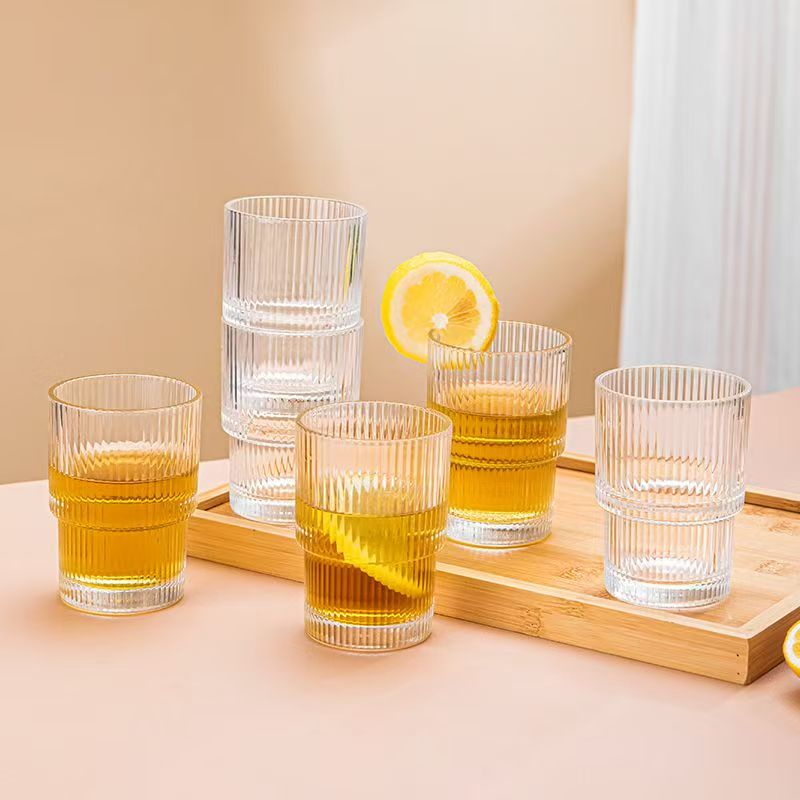
Many projects rely on ink to display vibrant brand colors. However, factories apply this ink using two vastly different techniques.
Comparison: Direct Screen Printing vs. Kiln-Fired Decals
Feature | Direct Screen & Pad Printing | Ceramic Decal Transfers |
|---|---|---|
Application Speed | Very Fast (Automated) | Slow (Manual Labor) |
Color Matching | Good (Limited to 1-2 Colors) | Excellent (Exact Pantone/CMYK) |
Dishwasher Durability | Moderate | Extremely High |
Surface Adaptability | Flat or slightly curved surfaces | Complex curves, stems, and bases |
Mechanism: Factories apply ink directly onto the glass surface. They push ink through a fine mesh screen or press it via a silicone pad. Afterward, they cure this ink using intense UV light or low-heat baking.
Pros:
Highly cost-effective for large bulk runs.
Fast production turnaround times.
Excellent for simple, bold graphic vectors.
Cons & Risks:
Prone to scratching or fading over time in commercial dishwashers.
Limited to one or two colors typically.
Struggles severely when wrapping graphics on curved glass.
Best For: We recommend this method for promotional event giveaways. When manufacturing Custom Glass Cups for low-cost merchandise or short-term hospitality usage, direct printing wins on price.
Mechanism: Printers place artwork onto a specialty water-slide decal paper. Workers then apply this decal by hand to the glass. They carefully squeegee out any water or air bubbles. Finally, the glass enters a high-temperature kiln. Temperatures usually exceed 1,000°F. This extreme heat permanently fuses the ceramic flux ink into the glass surface.
Pros:
Exceptional color fidelity handles CMYK and exact Pantone matches perfectly.
Accommodates highly intricate, multi-colored designs.
Wraps flawlessly around stems, bases, and complex curves.
Cons & Risks:
Labor-intensive manual application increases the per-unit cost.
Longer lead times occur due to the slow firing and cooling process.
Requires higher minimum orders to offset kiln operation costs.
Best For: This process dominates retail-ready branded drinkware. It fits high-end restaurant service perfectly. Choose this whenever you need intricate multi-color logos to survive harsh washing cycles.
Structural customization physically alters the glass. These methods remove material or shape the molten vessel itself. They offer unmatched permanence.
Mechanism: Equipment physically removes material from the glass surface. Lasers shoot focused beams to create micro-fractures in the glass. Alternatively, sandblasting (often called sandcarving) uses a high-pressure abrasive stream. Operators blow aluminum oxide sand through a custom stencil to carve the design.
Pros:
100% permanent design cannot wash or wear off.
Creates a premium, tactile, elegant frosted appearance.
Requires no harmful inks, solvents, or chemicals.
Cons & Risks:
Strictly monochromatic output produces no color variations.
Laser engraving can sometimes leave microscopic shards if operators skip proper cleaning.
Sandblasting runs much slower and costs more per unit than lasering.
Best For: Rely on engraving for executive corporate gifts and awards. It perfectly suits premium barware where longevity and elegance outweigh brand color requirements.
Mechanism: The logo integrates directly into the glass mold. Manufacturers finalize this during the molten manufacturing phase. As the factory blows or presses the glass, the mold imparts the design. The resulting vessel features raised (embossed) or recessed (debossed) glass.
Pros:
Delivers the ultimate bespoke, proprietary look.
Extremely durable against any physical or chemical stress.
Highly difficult for competitors or counterfeiters to replicate.
Cons & Risks:
Requires custom steel molds, leading to substantial upfront tooling costs ($5k–$20k+).
Standard MOQs often start at 10,000 to 30,000 units.
Lead times can easily exceed 3-6 months from design to delivery.
Best For: This fits global beverage brands beautifully. Major distillery custom bottles rely entirely on this method. It also serves large-scale proprietary hospitality glassware rollouts.
Custom manufacturing involves strict regulations and unpredictable variables. You must navigate these carefully to protect your budget and your customers.
Heavy Metal Compliance (Prop 65):
You must verify material safety proactively. All inks and decal fluxes must remain completely free of lead and cadmium. This requirement becomes critical for glassware intended for lip contact. California's Proposition 65 strictly regulates these heavy metals. Failing compliance tests leads to severe legal penalties. Always demand testing certificates from your supplier before authorizing mass production.
The Cost of Setup Fees:
Quotes often contain hidden variables. You should ask your supplier to break down all setup fees clearly.
Screen charges: Applied per color for direct printing setups.
Digitizing fees: Cover artwork file conversion for laser engraving software.
Mold fees: Represent the heavy upfront tooling required for glass embossing.
Breakage Allowances:
Glass breaks during transit and production. You must account for industry-standard spoilage. Breakage occurs naturally during custom production runs and freight transit. We advise buyers to order 5-10% over their exact requirement. This buffer accounts for acceptable loss rates. It ensures you have enough pristine units for your event or retail launch.
Decision time approaches. You must align your specific scenario to the correct manufacturing method. Reviewing past success Cases helps solidify your choice. Match your needs to these common profiles:
If you need a highly durable, multi-color logo for a restaurant: Choose Kiln-Fired Decals. The high-temperature firing ensures the colors survive industrial dishwashers daily.
If you need 500 low-cost branded glasses for a trade show next week: Choose Direct UV Printing. Speed and tight budgets drive this specific choice perfectly.
If you are gifting 50 high-end whiskey glasses to VIP clients: Choose Sandblast Engraving. The deep, tactile frosted finish screams luxury and permanence.
If you are launching a new consumer beverage line at scale: Choose Custom Embossing. It builds massive long-term brand equity and actively deters counterfeiting efforts.
Final Summary: The optimal choice for customizing glassware balances the visual demands of the logo against end-user handling. You must weigh upfront costs against long-term durability. No single method solves every branding challenge. Direct printing scales cheaply, decals offer vibrant durability, engraving delivers tactile luxury, and embossing secures proprietary ownership.
Next Steps: We advise you to audit your artwork complexity immediately. Count your exact colors. Next, establish your exact order volume before requesting quotes. Clear parameters help suppliers provide accurate pricing. Eliminate guesswork early in the process.
Call to Action: Never finalize a large order blindly. Promptly request a physical sample of a specific method. Request a fired-decal sample to test in your commercial dishwasher today. Seeing and feeling the product guarantees total satisfaction.
A: Clarify that engraving and embossing are 100% safe forever. Kiln-fired decals hold up extremely well under high heat. However, direct UV printing will eventually degrade under harsh commercial washing cycles.
A: Yes, but only through decal transfers or specialized pad printing. Engraving and embossing rely entirely on light and shadow rather than pigment. They cannot replicate specific brand colors.
A: It varies significantly by method. Engraving accommodates 1-12 units easily. Direct printing and decals usually require 72-144 units minimum. Custom embossing demands massive volume, requiring tens of thousands of units.
A: Sandblast engraving or high-resolution decals work best here. Direct screen printing often struggles with ultra-fine, microscopic details due to ink bleed on the glass surface.


