
Views: 0 Author: Site Editor Publish Time: 2026-09-10 Origin: Site


Bringing a design concept to life as a scalable, physical glass product demands extreme precision. Manufacturing delays, unexpectedly high defect rates, and strict non-compliance penalties can easily derail major product launches. They can also ruin highly anticipated seasonal brand campaigns. You need reliable partners to completely avoid these expensive pitfalls. Choosing the right manufacturing partner requires thoroughly understanding their specific production capabilities. You must also evaluate their upfront tooling costs and rigorous quality control standards. You cannot simply select the lowest bidder. Doing so risks severe quality drop-offs and damaged brand reputation. We will detail the exact stages of the glass production journey. You will learn how buyers can accurately evaluate suppliers based on technical merit. You will also discover how to anticipate hidden costs during prototyping. Finally, you can confidently move to large-scale mass production. This comprehensive guide ensures you navigate the entire journey safely and efficiently.
Tooling vs. Unit Cost: Custom molds require upfront investment ($1,500–$5,000+), but significantly reduce per-unit costs at higher volumes.
Production Methods Dictate MOQ: Machine-pressed and machine-blown glass require high MOQs (often 10,000+ units), while hand-blown or semi-automatic processes accommodate smaller test runs.
Prototyping is Mandatory: Never skip the 3D printed or physical resin prototype stage; it validates ergonomics and volume capacity before expensive steel molds are cut.
Compliance is Non-Negotiable: Commercial custom glassware must pass FDA, LFGB, or California Proposition 65 testing for lead and cadmium limits.
Designs looking good on paper often fail during actual physical production. Uneven wall thickness causes immediate structural weakness. Extreme drafting angles prevent easy mold release. Engineers must quickly translate your initial sketches into rigorous engineering drawings. Computer-Aided Design (CAD) software and 3D modeling help define exact liquid capacity. These models highlight critical details like commercial pour lines. They also determine the overall product weight and optimal center of gravity.
Glass naturally shrinks during the cooling phase. Manufacturers must establish acceptable deviation limits upfront. We call these limits tolerances. Tolerances dictate allowable variances for height, weight, and internal volume. Strict tolerances prevent catastrophic downstream failures.
Next, buyers face a critical decision matrix. You must objectively evaluate your true project requirements. Consider these three pivotal assessment steps:
Evaluate if your project truly requires a completely bespoke shape.
Calculate the upfront financial risk of cutting entirely new steel molds.
Determine if private-labeling an existing factory blank achieves your primary business goal.
Adding custom logos or decals to standard shapes drastically lowers your overall risk. Bespoke designs demand higher upfront investments but offer complete market differentiation. You must balance these competing priorities before engaging a factory.
Understanding the core production methodology is absolutely vital for project success. Different approaches yield vastly different results. You must compare the three primary production methods based on scalability constraints and specific design requirements. Selecting the wrong method wastes both time and capital.
Machine-pressed glass utilizes a mechanical plunger to force molten glass into a heavy mold. It represents a highly durable production option. Thick walls characterize this specific manufacturing style.
Best for: Thick, durable items like pint glasses, heavy-base tumblers, and commercial ashtrays.
Evaluation: You face high upfront tooling costs. However, you benefit from a very low unit cost. Factories demand high Minimum Order Quantities (MOQs). The production speed remains exceptionally fast.
Machine-blown glass uses compressed air to form the molten material against mold walls. This method creates lighter, more delicate items. It requires highly precise temperature control to maintain uniform wall thickness.
Best for: Thin-walled, elegant drinkware including wine glasses and delicate champagne flutes.
Evaluation: This method delivers excellent optical clarity. The sophisticated equipment demands high MOQs to justify production runs.
Hand-blown glass relies on skilled artisans manipulating molten glass through traditional blowpipes. It remains a labor-intensive but highly artistic endeavor. Human elements introduce natural, charming inconsistencies.
Best for: Complex, artisanal, or low-volume premium bespoke shapes.
Evaluation: Buyers enjoy lower initial tooling costs. Conversely, the individual unit cost runs much higher. Factories accommodate lower MOQs easily. Inherent unit-to-unit variations occur frequently. This makes it unsuitable for strict uniform capacity requirements.
Production Methods Comparison Chart
Production Method | Ideal Product Types | Tooling Cost | Typical MOQ | Production Speed |
|---|---|---|---|---|
Machine-Pressed | Pint glasses, thick tumblers | High | 10,000+ | Very Fast |
Machine-Blown | Wine glasses, elegant flutes | High | 10,000+ | Fast |
Hand-Blown | Artisanal or complex shapes | Low | 500 - 1,000 | Slow |
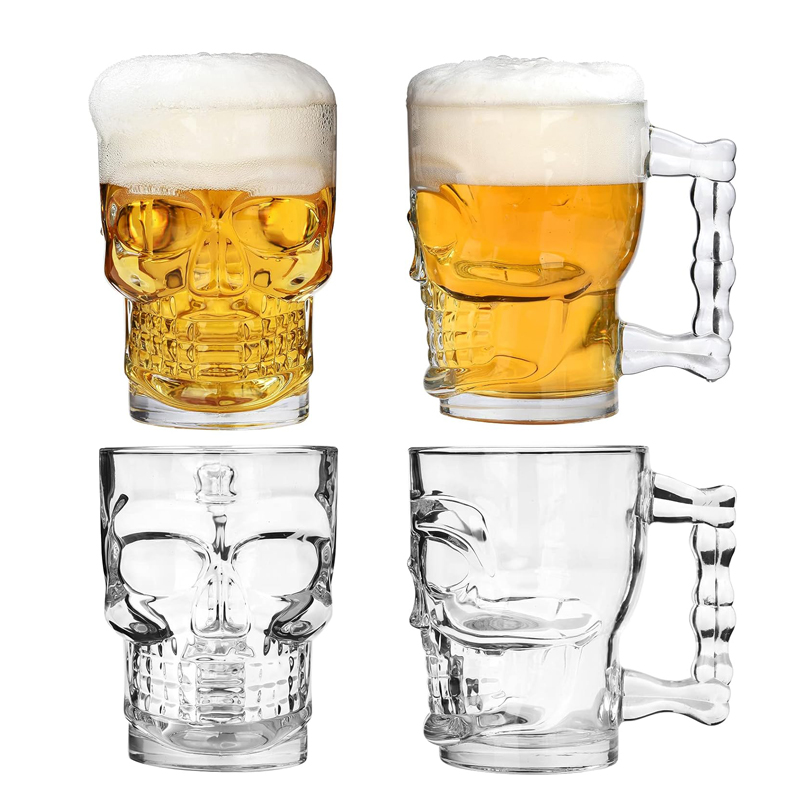
Mold engineering bridges the gap between digital design and physical reality. Engineers select materials based on projected volume. Cast iron molds work well for shorter, limited runs. Hardened steel molds endure high-volume, automated production. The transition from 3D CAD files to cutting steel demands extreme precision. A flawed mold ruins thousands of units.
The sampling phase acts as your ultimate safety net. Buyers must insist on a "first article inspection" before authorizing mass production. Industry professionals call this the T1 sample. The T1 sample reveals hidden flaws invisible on digital screens. Engineers make common adjustments during this vital prototyping phase. They fix unsightly mold seams. They adjust molten flow dynamics to completely prevent trapped air bubbles. They carefully balance the base to ensure tabletop stability.
Project managers must embrace timeline realities. Rush jobs consistently produce inferior goods. We map out standard lead times below to set realistic expectations:
Mold Creation: Allow 15 to 25 days for engineers to cut and polish the molds.
Initial Sampling: Allocate 10 to 15 days to produce and ship the T1 samples.
Sample Revisions: Reserve 7 to 10 days for minor mold tweaks and secondary sampling if necessary.
Mass Production: Expect 30 to 45 days for full-scale manufacturing, depending on the chosen Custom Glassware Manufacturing Process.
Transparent timeline mapping prevents stressful launch delays and costly air-freight upgrades.
How factories treat the glass after forming heavily determines the final brand aesthetic. Bare glass rarely tells a complete brand story. Post-processing customization options elevate standard shapes into premium merchandise. You must carefully weigh visual impact against long-term durability.
Different decoration techniques carry distinct pros and cons. Silk screen printing remains highly cost-effective for large production runs. However, it offers limited color complexity. Decal application provides high-resolution photographic detail. Decals require secondary baking in specialized kilns to ensure long-term durability. Sandblasting and laser engraving deliver a premium tactile feel. These methods create permanent marks but incur a higher cost per unit.
Electroplating and color spraying offer striking aesthetic differentiation. Metallic finishes catch the eye instantly. However, these surface treatments require strict adhesion testing. Poorly applied sprays flake off rapidly. Assessing dishwasher safety and fade resistance over time remains critical. Permanent engraving survives thousands of industrial wash cycles. Conversely, cheap color spraying degrades after mere months. When designing premium Custom Glassware, always align your decoration choice with expected consumer usage habits.
Experienced buyers acknowledge a fundamental manufacturing truth. A 0% defect rate in glass production is statistically impossible. Raw materials contain microscopic impurities. Thermal dynamics fluctuate slightly. You must clearly define standard Acceptable Quality Limits (AQL) before production begins. Standard AQL protocols dictate how many minor, major, or critical defects trigger a batch rejection.
The annealing process serves as the backbone of structural integrity. Hot glass cools unevenly, creating massive internal stress. Unchecked stress causes spontaneous shattering hours or days later. Factories use long, temperature-controlled tunnels called lehr ovens. Lehr ovens cool the products slowly and evenly. This controlled cooling relieves internal tension safely.
Robust testing protocols validate product safety. Thermal shock testing ensures the item handles rapid temperature changes. Technicians plunge hot items directly into cold water to verify resilience. Polariscope inspection utilizes polarized light to reveal invisible stress fractures. If a factory skips these tests, you face massive liability risks.
Material safety requires absolute vigilance. You must proactively verify the complete absence of dangerous heavy metals. Commercial products must never leach toxins into beverages. Mandate strict compliance documentation from your manufacturer. Always demand valid FDA, LFGB, or California Proposition 65 certificates. Sourcing high-quality Custom Glassware means prioritizing consumer safety above simple cost savings.
Shortlisting logic separates legitimate factory partners from unreliable middlemen. Key criteria help buyers thoroughly vet potential partners. You must look beyond slick websites and heavily edited marketing videos. Request detailed evidence of their specific production capabilities and historic output.
Factory audits and formal certifications provide baseline trust. ISO 9001 certification proves they maintain consistent, documented quality management systems. BSCI (Business Social Compliance Initiative) certification demonstrates their commitment to ethical labor practices. These documents mean they value production reliability and human rights.
Watch closely for glaring red flags during initial communications. Avoid suppliers unwilling to provide raw material origin certificates. Beware of vague definitions regarding their shipping breakage allowance. Standard breakage allowances hover around 2% to 3%. Factories refusing to clarify this will likely blame you for shipping damages. Finally, reject partners over-promising on timelines. Claiming a 10-day mass production turnaround for entirely new molds is physically impossible. They will cut dangerous corners to meet that fake deadline.
Construct a rigorous Request for Quote (RFQ) as your next-step action. A professional RFQ includes detailed technical CAD drawings. State your target MOQs clearly. Explicitly list all required testing standards and compliance certificates. A detailed RFQ forces unqualified suppliers to immediately opt out of the bidding process.
Successful custom glass production hinges on aligning your initial design with the correct manufacturing process. Machine-pressed methods excel for durable, heavy items, while blown techniques dominate delicate drinkware. Establishing strict tolerances and defining Acceptable Quality Limits early prevents disastrous production runs. Never skip the prototyping stage, as physical samples expose flaws invisible in digital models.
We advise buyers to prioritize manufacturers emphasizing engineering feasibility and highly transparent sampling processes. Choosing partners simply offering the lowest unit price usually results in brittle products and missed deadlines. Demand rigorous compliance testing, including thermal shock evaluations and heavy metal screenings, to protect your brand reputation.
Take the next step toward actualizing your product vision today. Submit your CAD files or conceptual design sketches to a qualified engineering team. Request a comprehensive feasibility review and a detailed custom tooling estimate to begin your manufacturing journey safely.
A: The production method strictly dictates the MOQ. Hand-blown processes accommodate lower runs, typically between 500 and 1,000 units. Conversely, automated machine-pressed or machine-blown glass requires much higher volumes. Factories usually demand at least 10,000 units to justify the massive setup costs of automated production lines.
A: Custom glass molds generally range from $1,000 to $5,000. The exact price depends on shape complexity and the chosen production method. Cast iron molds for shorter runs cost less, while hardened steel molds for high-volume automated lines cost more. Many factories refund this mold fee once your total order volume reaches a specified threshold.
A: A standard production cycle requires patience. Expect 3 to 4 weeks for initial mold engineering and physical T1 sampling. Once you formally approve the prototype, mass production typically takes another 4 to 6 weeks. Total lead time usually spans 7 to 10 weeks before shipping.
A: Solid colored glass relies on specific mineral additives, limiting precise color matching. You cannot hit exact Pantone shades this way. However, post-processing techniques like color spray coating or baked decals can match precise Pantone requirements perfectly, though they may lack the inherent durability of solid colored glass.


